Panasonic vs Panasonic
We compare the Panasonic and the Panasonic across every dimension that matters - our scores, the key specs, and how each performs on the things you will actually notice day to day.

At a glance
| Panasonic | Panasonic | |
|---|---|---|
| Our score | 9.2/10 | 7.9/10 |
| Best for | Baking fresh, additive-free bread at home, ready for the morning with the timer, including gluten-free | Baking fresh, additive-free bread at home, including gluten-free |
| Not ideal for | Anyone short on cupboard space or who only eats bread occasionally, where shop bread is simpler | Anyone short on cupboard space or who only eats bread occasionally, where shop bread is simpler |
| Brand | Panasonic | Panasonic |
Loaf Sizes and Capacity
Panasonic
This bread maker states the SD-R2530 includes multiple cooking options, yet the product title does not specify loaf sizes or the machine's capacity in grams or cups, so exact amounts must be confirmed from the manual or the retailer listing. Loaf size affects how much dough can fit, and it changes how consistently loaves rise in a fixed pan. Buyers should check whether the SD-R2530 supports multiple loaf weights, for example small and large settings, or only one capacity. If only one capacity is offered, ingredients scaled for a larger loaf may underbake, while smaller doughs may produce denser results. Capacity also determines how flour and liquids should be measured for reliable outcomes.
Panasonic
The title only states "Automatic Mini Bread maker" and highlights a compact design, so the machine is expected to suit smaller batches rather than family-sized loaves. For regular gluten-free baking, loaf weight limits and how recipes scale should be confirmed in the manual or full spec sheet. If the machine's capacity is limited, thicker dough may need closer monitoring during baking to achieve the required bake.
Programmes and Settings
Panasonic
Once loaf size and capacity are confirmed, the next thing to check on the Panasonic is how its programmes and settings handle different bread styles, particularly since the product title only states it has 30 programmes and does not mention specific loaf weights. The SD-R2530 uses programme selection plus a 13 hours digital delay timer, so baking can be scheduled to start automatically. Separate settings are suited to routine breads, and the machine also includes 4 gluten-free modes, which adjust mixing and baking steps. Bread types that need extra inclusions can use the automatic fruit/nut dispenser.
Panasonic
Programme and settings matter because they control the mixing rhythm, rise time and baking stage, which affects texture and evenness, particularly for gluten-free dough. This bread maker provides 18 auto programmes, plus a compact set of 4 gluten-free programmes, shown via its LCD display. A programme should be selected to match the dough type, then the steps in the manual should be followed, since the order for adding ingredients can change results. The advantage comes from the dedicated gluten-free options.
Gluten-Free and Special Diets
Panasonic
When gluten-free baking is the goal, the bread maker provides a practical starting point because it includes gluten-free modes and can accommodate ingredients that normally call for different mixing and baking approaches. For special diets, it is handled by selecting the closest programme, then using the recipe's ingredient ratios and any listed resting time. Gluten-free mixes should be treated as separate from wheat dough, since hydration needs can differ and texture can vary if the batter is too thick or too thin. The key strengths are dedicated modes for gluten-free baking, while the main limitation is the need for accurate measuring and close recipe discipline.
Panasonic
For people avoiding gluten, the Panasonic is built around dedicated gluten-free options, with 4 gluten-free programmes plus a larger set of 18 auto programmes, all shown on its LCD display. These dedicated cycles are intended to help gluten-free dough rise and bake more predictably than standard bread settings, because gluten-free blends often behave differently. The auto programmes can still be relevant for special diets, as they add further preset choices beyond the gluten-free programmes.
Ease of Use and Controls
Panasonic
Clear controls make the Panasonic easier to live with, especially after selecting the right programme for gluten-free and other special diets. The machine offers 30 programmes and includes 4 gluten-free modes, so users can choose options without guessing. In day-to-day use, programme, loaf size and crust preference are set using the buttons, then the ingredients are added to the pan. A 13 hour digital timer supports delayed start, which helps when ingredients are prepared earlier. The interface is straightforward, but the number of choices can feel busy at first, particularly for newcomers.
Panasonic
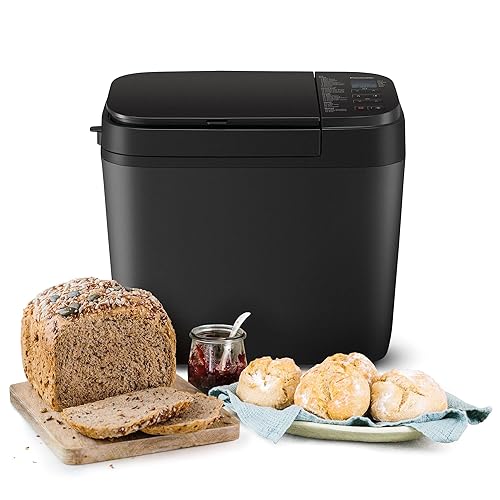
After looking at how gluten-free and special-diet settings are handled, it makes sense to focus on how the bread maker is used day to day. The mini bread maker uses a straightforward LCD display to show chosen settings, and its black body keeps controls easy to spot. For everyday use, the user selects from the available auto programmes, then chooses a gluten-free programme when needed. The process follows simple steps: measure ingredients, add them to the pan, close the lid, then start. It is compact, but that also means space for accessories is limited.
Crust, Timer and Dispenser
Panasonic
With crust options, the bread maker lets users control how the loaf turns out, but results still depend on selecting the correct programme. It includes a 13-hour digital delay timer, allowing ingredients to be measured in advance and baking to start later. For recipes that include fruit or nuts, an automatic fruit/nut dispenser adds them during the cycle, reducing the need for manual add-ins. The dispenser performs best when the chosen programme matches the recipe, because an incompatible mode can affect mixing and browning. The machine also features four gluten-free modes, which can change texture and crust development.
Panasonic
The Panasonic includes an LCD display that shows the selected crust setting, timer information, and any available dispensing functions. The control area is designed to be clear against a black finish, with crust level selection made through the controls. The timer setting appears on-screen to help plan start and serving times, but the maximum timer delays are not stated. If a dispenser function is available, the display indicates its use.
Cleaning and Maintenance
Panasonic
After using the delay timer and automatic fruit/nut dispenser, keeping the Panasonic SD-R2530 clean helps it keep working well, as crumbs and small bits can build up around the mixing area. The unit should be unplugged and left to cool, then the bread pan is removed, emptied, and wiped with a damp cloth. For tougher dough residue, soak briefly in warm water, then rinse and dry fully. The dispenser and surrounding housing need careful checks, as trapped nuts can burn. The exterior should be cleaned with a lightly damp cloth only, and no abrasive pads should be used.
Panasonic
Cleaning and maintenance help the bread maker stay in good working order, and owners can usually keep it manageable with regular, simple routines. After each bake, it should cool fully before wiping. The bread pan and kneading blade need careful removal, then cleaning with warm water and mild soap, while abrasive pads are avoided to protect surfaces. The exterior housing should be wiped with a damp cloth, and the LCD should be kept dry. Any crumbs in the lid area should be cleared gently. For best results, parts should be dried thoroughly before reassembly, since trapped dryness can lead to odours.
Who Is This Bread Maker For?
Panasonic
Who the Panasonic suits best is often determined by the level of control expected over daily baking routines and ingredient handling. It is aimed at people who prefer guided, programme-based baking, supported by 30 programmes and a 13 hours digital timer for scheduling. Those planning to bake gluten-free loaves may be drawn to its 4 gluten-free modes, as they provide dedicated settings rather than requiring guesswork. The automatic fruit/nut dispenser also suits users who want add-ins added at the right stage without manual timing. Buyers looking for very granular, step-by-step control beyond the available programmes may find the options limiting.
Panasonic
The Panasonic SD-PN100 is best suited to people who want a compact bread maker with dedicated gluten-free support, and who prefer using built-in programmes rather than starting from scratch every time. It suits households that want variety, because it includes 18 auto programmes and 4 gluten-free programmes, supported by an LCD display for guidance. People who want repeatable results may find it easier to follow, since they can select a programme and let the machine handle most steps.
Panasonic: pros
- 30 programmes
- Gluten-free programme
- Automatic fruit/nut dispenser
- Delay timer for fresh bread in the morning
- Fresh, additive-free bread for less than shop prices
Cons
- Takes up cupboard space when not in use
- The kneading paddle can leave a small hole in the base of the loaf
- Home-baked bread stales faster than shop bread, as it has no preservatives
Panasonic: pros
- Gluten-free programme
- Fresh, additive-free bread for less than shop prices
Cons
- Takes up cupboard space when not in use
- The kneading paddle can leave a small hole in the base of the loaf
- Home-baked bread stales faster than shop bread, as it has no preservatives
Our verdict
Our pick is the Panasonic (our score 9.2/10) - A practical bread maker (30 programmes, gluten-free) for fresh home-baked bread with minimal effort. The Panasonic is still worth it if it is cheaper when you check, or if it better matches your specific needs.